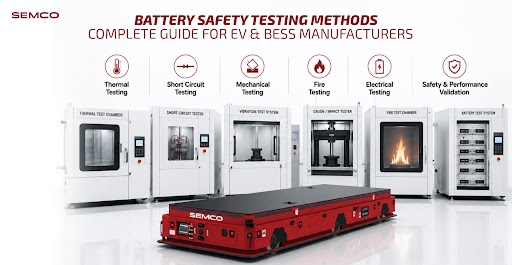
The rapid growth of electric vehicles (EVs), energy storage systems (BESS), and lithium-ion battery manufacturing has made battery safety one of the most critical aspects of production. A single manufacturing defect can lead to overheating, internal short circuits, thermal runaway, costly recalls, or catastrophic failures.
Battery safety is no longer limited to meeting regulatory requirements. It has become a competitive advantage for manufacturers aiming to supply automotive OEMs, energy storage developers, and global electronics companies.
To ensure consistent quality, manufacturers must implement comprehensive safety testing throughout the battery manufacturing process—from individual cells to complete battery packs. Equally important is selecting an assembly line that integrates automated inspection, precision testing, traceability, and quality control.
This guide explains the major battery safety testing methods used worldwide and why Semco Infratech has become a trusted partner for advanced lithium battery and BESS assembly line solutions.
Why Battery Safety Testing Is Essential
Battery failures are rarely caused by a single event. Most failures originate from manufacturing defects that go unnoticed until the battery is exposed to charging, discharging, vibration, heat, or environmental stress.
Proper testing helps manufacturers:
- Prevent thermal runaway
- Detect internal defects before shipment
- Improve product reliability
- Reduce warranty claims
- Meet international certification requirements
- Ensure operator and end-user safety
- Maintain consistent production quality
For EV manufacturers and BESS integrators, safety testing is an investment that significantly reduces long-term operational risks.
Major Battery Safety Testing Methods
1. Cell Voltage Testing
Voltage testing verifies that every battery cell operates within the specified voltage window before entering the assembly process.
It helps identify:
- Undercharged cells
- Overcharged cells
- Damaged cells
- Storage-related degradation
Automated voltage measurement ensures only qualified cells proceed to production.
2. Internal Resistance (IR) Testing
Internal resistance is one of the strongest indicators of battery health.
Higher resistance can indicate:
- Internal damage
- Poor electrode connections
- Aging cells
- Manufacturing inconsistencies
IR testing ensures cells with abnormal electrical characteristics are rejected before module assembly.
3. Capacity Testing
Capacity testing measures the actual energy a battery can store and deliver.
Manufacturers perform controlled charge-discharge cycles to verify:
- Rated capacity
- Energy efficiency
- Cycle stability
- Cell consistency
Cells with mismatched capacities reduce battery pack performance and lifespan.
4. Battery Cell Sorting
After voltage and capacity testing, automated sorting systems classify cells based on:
- Capacity
- Internal resistance
- Voltage
- Temperature characteristics
Using closely matched cells significantly improves battery pack balance and operational life.
5. Active Balancing Verification
Battery balancing ensures each series-connected cell maintains nearly identical voltage during charging and discharging.
Proper balancing prevents:
- Overcharging
- Deep discharge
- Capacity loss
- Cell degradation
Modern BMS testing verifies balancing performance under real operating conditions.
6. High Voltage Insulation Testing
High-voltage battery packs require insulation resistance testing to ensure electrical isolation between live circuits and the battery enclosure.
This test detects:
- Insulation degradation
- Moisture contamination
- Manufacturing defects
- Leakage current
It is particularly important for EV battery packs and containerized BESS systems.
7. Dielectric Withstand (Hipot) Testing
Hipot testing applies voltage significantly above the operating level to verify insulation strength.
The test ensures that battery packs can safely withstand electrical stress without insulation breakdown.
This is widely used in:
- EV battery packs
- Energy storage systems
- Industrial battery systems
8. Laser Weld Inspection
Poor welding is one of the leading causes of battery failures.
Modern production lines inspect weld quality using:
- Vision systems
- CCD inspection
- AI defect detection
- Laser measurement
Defects such as weak welds, missing welds, excessive spatter, and misalignment can be identified automatically.
9. Leak Testing
Battery enclosures must prevent moisture and contaminants from entering the pack.
Leak testing verifies enclosure sealing before final assembly.
Common methods include:
- Pressure decay
- Air leak testing
- Vacuum testing
- Helium leak detection
Leak testing is particularly important for battery packs designed for outdoor environments.
10. Water Immersion Testing
Water immersion testing evaluates whether battery packs can resist water intrusion under controlled conditions.
It validates:
- Seal integrity
- Waterproof performance
- Structural reliability
This testing supports compliance with ingress protection (IP) requirements for demanding operating environments.
11. Thermal Performance Testing
Thermal testing evaluates battery behavior under different operating temperatures.
Manufacturers analyze:
- Heat generation
- Temperature distribution
- Cooling efficiency
- Thermal stability
Thermal management plays a critical role in preventing thermal runaway and extending battery life.
12. Charge-Discharge Cycle Testing
Repeated charging and discharging evaluates:
- Cycle life
- Capacity retention
- Energy efficiency
- Long-term degradation
This testing provides valuable data for validating battery performance over its expected service life.
13. End-of-Line (EOL) Testing
EOL testing is the final quality verification before shipment.
Typical EOL testing includes:
- Voltage measurement
- Current verification
- Communication testing
- BMS functionality
- Insulation testing
- CAN communication
- Relay testing
- Functional validation
A comprehensive EOL system ensures only fully compliant battery packs leave the factory.
International Battery Safety Standards
Manufacturers commonly design their testing processes around internationally recognized standards, including:
- IEC 62619 – Safety requirements for industrial lithium-ion batteries
- IEC 62133 – Safety requirements for portable rechargeable cells and batteries
- UL 1973 – Batteries for stationary energy storage applications
- UL 9540 – Energy storage systems and equipment
- UL 9540A – Test method for evaluating thermal runaway fire propagation
- UN 38.3 – Transportation testing for lithium batteries
- ISO 26262 – Functional safety for automotive systems
Compliance with these standards improves product acceptance in global markets.
Why Choosing the Right Assembly Line Matters
Even the best testing procedures cannot compensate for poor manufacturing equipment.
An advanced battery assembly line should provide:
- High repeatability
- Automated inspection
- Precision welding
- Complete traceability
- MES integration
- Intelligent data collection
- Scalable automation
- Reduced operator dependency
Automation minimizes human error while increasing throughput and consistency.
Why Semco Infratech Is the Right Partner for Battery Assembly Lines
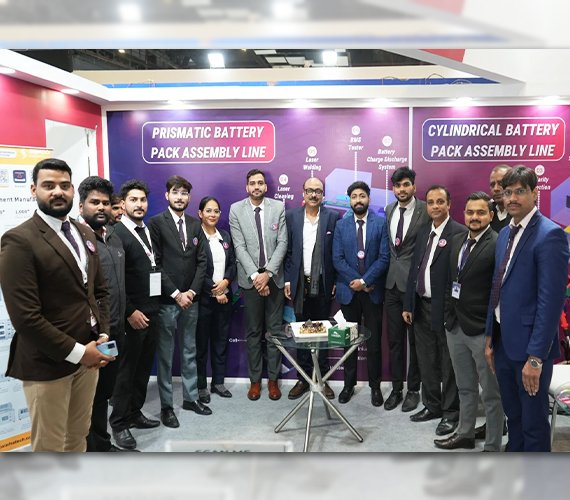
Semco Infratech specializes in advanced lithium battery manufacturing equipment for EV, ESS, and industrial battery applications. Rather than supplying standalone machines, the company delivers integrated production solutions that combine automation, testing, inspection, and traceability.
Its portfolio covers critical stages of battery manufacturing, including cell sorting, laser cleaning, spot welding, laser welding, module assembly, pack assembly, battery management system (BMS) testing, end-of-line testing, and battery energy storage system (BESS) production.
Key advantages include:
- Complete turnkey battery assembly line solutions
- Modular systems for pilot production and gigafactories
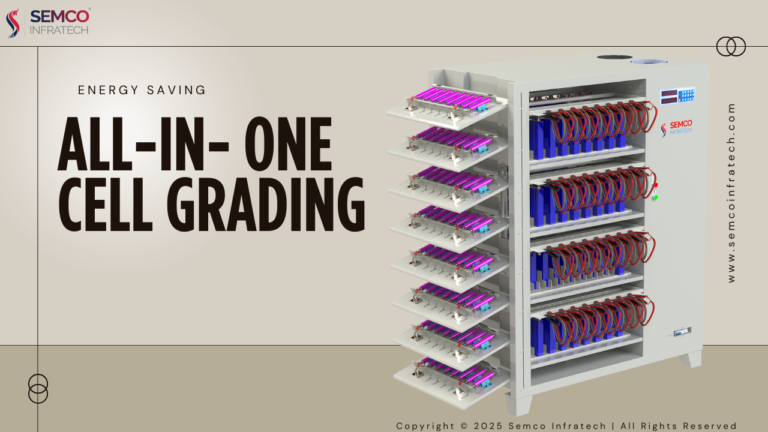
- Automated cell sorting and grading
- High-precision laser and spot welding systems
- Integrated CCD vision inspection
- Advanced battery testing and EOL validation
- BMS communication and functional testing
- Custom automation tailored to customer requirements
- Production data traceability and quality monitoring
- Technical support, commissioning, operator training, and after-sales service
By integrating manufacturing and testing into a single production workflow, Semco Infratech helps manufacturers improve product quality, reduce defects, and increase production efficiency.
Future Trends in Battery Safety Testing
The battery industry is moving toward intelligent manufacturing powered by AI, machine vision, and real-time analytics. Future production lines are expected to include:
- AI-based defect detection
- Predictive maintenance
- Digital twins for process optimization
- Real-time quality analytics
- Automated traceability across the production lifecycle
- Smart factory integration using Industry 4.0 technologies
Manufacturers adopting these technologies will be better positioned to meet growing quality expectations and regulatory requirements.
Conclusion
Battery safety testing is a fundamental part of modern lithium-ion battery manufacturing. Comprehensive testing—from cell qualification and insulation verification to weld inspection, leak testing, thermal evaluation, and end-of-line validation—helps manufacturers deliver reliable and safe products while reducing production risks.
However, effective testing depends on equally capable manufacturing equipment. Integrated, automated assembly lines with built-in inspection and traceability enable higher consistency, better quality control, and compliance with international standards. For manufacturers seeking scalable, high-performance production solutions, Semco Infratech offers end-to-end battery assembly line technologies designed to support the evolving demands of the EV and energy storage industries.
References
- International Electrotechnical Commission (IEC). IEC 62619: Secondary Cells and Batteries Containing Alkaline or Other Non-Acid Electrolytes – Safety Requirements for Secondary Lithium Cells and Batteries for Industrial Applications.
- International Electrotechnical Commission (IEC). IEC 62133-2: Safety Requirements for Portable Sealed Secondary Lithium Cells and Batteries.
- UL Solutions. UL 1973 – Batteries for Use in Stationary, Vehicle Auxiliary Power and Light Electric Rail Applications.
- UL Solutions. UL 9540 – Energy Storage Systems and Equipment.
- UL Solutions. UL 9540A – Test Method for Evaluating Thermal Runaway Fire Propagation in Battery Energy Storage Systems.
- United Nations. UN Manual of Tests and Criteria, Part III, Sub-section 38.3 – Transport of Lithium Batteries.
- International Organization for Standardization (ISO). ISO 26262 – Road Vehicles – Functional Safety.
Ideation by Manpreet Singh