
Battery Thermal Runaway Tester

Technical Excellence

Battery Thermal Runaway Tester

Product Overview

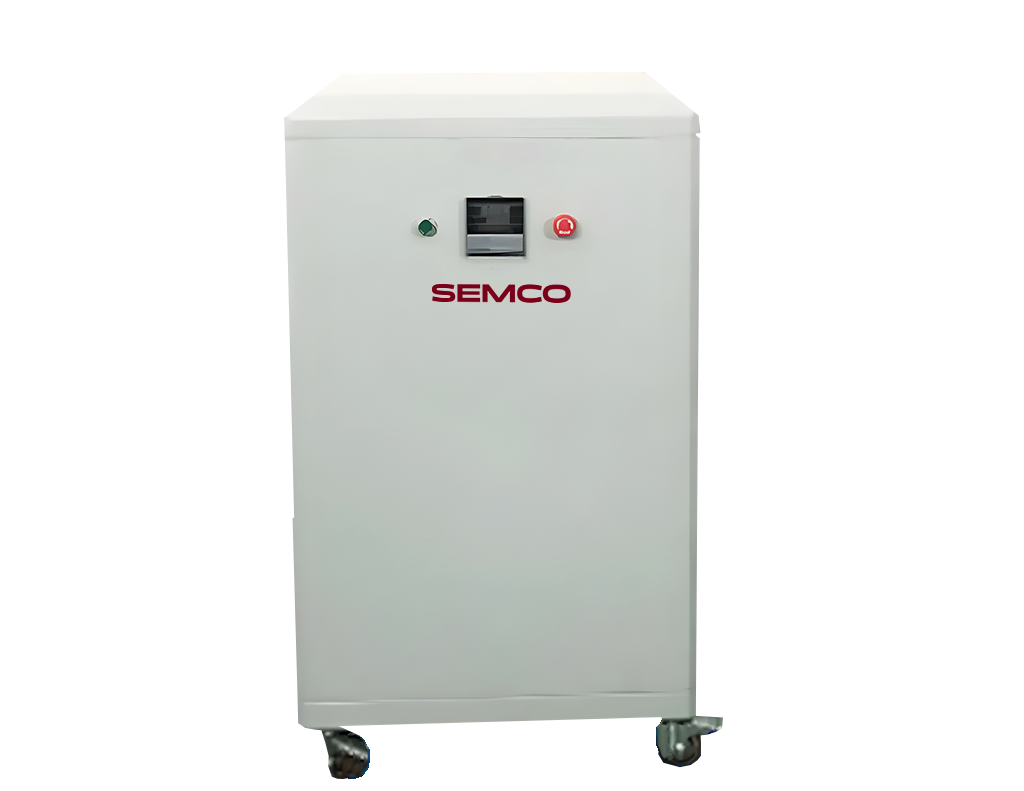
The Battery Thermal Runaway and Thermal Propagation Tester is a specialized battery safety test system designed to evaluate the onset of thermal runaway in lithium-ion cells and the propagation behavior in battery modules and packs. The system supports both heating trigger and overcharge trigger methods and provides comprehensive data acquisition for voltage, current, and temperature.

The solution is widely used by EV battery manufacturers, energy storage companies, R&D laboratories, and certification centers to conduct critical abuse tests in accordance with global battery safety standards including UL 9540A, UL 1973, GB 38031, IEC 62619, and GB/T 36276.
Line Speed

6m / 7m / 8m

Dimensions

40 ft – 200 ft

Power Requirement

20 kW – 200 kW

Key Fixture Features

Battery Thermal Runaway Tester

Request a Quote

Looking for the right solution? Our experts are here to guide you with specifications, customization options, and pricing details.
The Battery Thermal Runaway Tester is a specialized battery safety testing system designed to evaluate the behavior of lithium-ion cells, modules, and battery packs under controlled thermal runaway conditions. It enables manufacturers to analyze heat generation, gas release, thermal propagation, and failure characteristics during abuse testing. Equipped with advanced temperature monitoring, safety protection, data acquisition, and programmable control, the system supports battery research, product validation, and compliance with international safety standards for EV and energy storage applications. Thermal runaway testing is critical for assessing battery safety and mitigating fire and explosion risks in real-world applications.

Suitable for industries such as:

EV battery production, energy storage manufacturing, battery research labs, electronics assembly, and OEM-based fabrication units.

The Battery Thermal Runaway Tester provides a safe and controlled environment for evaluating the thermal stability and failure characteristics of lithium-ion batteries. Featuring precise temperature control, real-time data acquisition, multiple safety interlocks, and programmable test profiles, it helps manufacturers assess thermal runaway behavior, improve battery design, and validate product safety for EVs, BESS, and other energy storage applications.

Product Name

Description

Battery Thermal Runaway Tester
Category Parameter Specification
General Product Name Battery Thermal Runaway / Thermal Propagation Tester
General Model TA-RSK
Control Control Method Remote Computer Control + Video Monitoring
Trigger Methods Heating Trigger 1 Channel, Adjustable Power
Trigger Methods Overcharge Trigger 1 Channel, Adjustable Current & Voltage
AC Heating Trigger Heating Power 3 kW Total (2 × 1.5 kW Heating Plates)
AC Heating Trigger Temperature Ramp 1–10°C/min
AC Heating Trigger Control Modes Constant Temperature, Constant Power, Multi-Step
AC Heating Trigger Power Supply AC 220V, Single Phase
AC Heating Trigger Output Voltage 0–300 VAC
AC Heating Trigger Output Frequency 45–200 Hz
AC Heating Trigger Communication RS-232C
DC Overcharge Trigger Output Voltage 0–10 V
DC Overcharge Trigger Output Current 0–400 A
DC Overcharge Trigger Rated Power 4 kW
DC Overcharge Trigger Accuracy ≤0.1%
Data Acquisition High Voltage Measurement 0–1000 V, 1 Channel
Data Acquisition Low Voltage Measurement 0–10 V, 1 Channel
Data Acquisition Temperature Channels 15 + 1 Heating Plate Channel
Data Acquisition Temperature Range 0–800°C
Data Acquisition Sampling Frequency 1–20 Hz Adjustable
Data Acquisition Temperature Accuracy ±1.5°C
Computer Industrial PC 1 Set
Power Cabinet Dimensions 750 × 750 × 1300 mm
Power Cabinet Weight 50 kg
Electrical Power Supply AC 380V ±10%, 50 Hz
Electrical Total Power 7 kW

Applications

This product is used for:

Support & Warranty

Reviews

There are no reviews yet.

Be the first to review “Battery Thermal Runaway Tester”

Your email address will not be published. Required fields are marked *

Faq

Frequently Asked Questions

Find quick answers to common questions about our BESS Assembly Line, including automation capabilities, supported battery types, customization options, safety standards, and production scalability.

What is a BESS Assembly Line?
A BESS Assembly Line is an automated system used to assemble battery energy storage modules and packs efficiently and accurately.
It is used to produce battery modules, battery packs, and complete energy storage systems.
Yes, the line supports fully or semi-automated operations based on production requirements.
It supports lithium-ion batteries including prismatic, cylindrical, and pouch cells.
How is product quality ensured?
In-line testing, vision inspection, and automated checks ensure consistent quality and reliability.
Yes, the assembly line can be customized to match specific capacity, layout, and production needs.
The system includes safety interlocks, fault detection, and controlled assembly environments.
Yes, it is designed for high-throughput and scalable manufacturing.

Faq

Frequently Asked Questions

Find quick answers to common questions about our BESS Assembly Line, including automation capabilities, supported battery types, customization options, safety standards, and production scalability.

A Battery Thermal Runaway Tester is an advanced safety testing system designed to evaluate how lithium-ion batteries react under extreme thermal conditions that may trigger thermal runaway. It helps manufacturers assess battery safety, fire risks, heat generation, gas release, and overall system stability during abnormal operating conditions.
The primary purpose of a Battery Thermal Runaway Tester is to simulate battery failure scenarios and identify potential safety risks caused by overheating, overcharging, internal short circuits, or mechanical damage. A Battery Thermal Runaway Tester helps manufacturers improve battery safety and ensure compliance with testing standards.
A Battery Thermal Runaway Tester is widely used in industries such as lithium-ion battery manufacturing, electric vehicles (EV), battery energy storage systems (BESS), aerospace, electronics, renewable energy, automotive, research laboratories, and battery testing facilities.
A Battery Thermal Runaway Tester can test lithium-ion battery cells, battery modules, battery packs, EV batteries, energy storage batteries, consumer electronics batteries, and industrial battery systems to analyze thermal stability and safety performance.
Thermal runaway testing using a Battery Thermal Runaway Tester is important because lithium-ion batteries can become unstable under excessive heat or fault conditions. Testing helps detect risks such as overheating, fire, explosion, gas leakage, and performance degradation, improving overall battery reliability and user safety.
A Battery Thermal Runaway Tester typically includes precise temperature monitoring, gas detection systems, thermal imaging compatibility, automated test programming, safety enclosures, data recording, explosion-proof design, and customizable testing configurations for accurate battery evaluation.
Yes, a Battery Thermal Runaway Tester can be customized according to battery size, testing standards, chamber dimensions, temperature requirements, automation levels, and industry-specific safety protocols to meet different manufacturing and testing needs.
Semco Infratech offers advanced Battery Thermal Runaway Tester solutions engineered for high-precision battery safety testing. With industrial-grade reliability, customization capabilities, and technical expertise in battery testing equipment, Semco helps manufacturers improve product safety, testing accuracy, and compliance with international standards.
Semco
A Battery Thermal Runaway Tester is an advanced safety testing system designed to evaluate how lithium-ion batteries react under extreme thermal conditions that may trigger thermal runaway. It helps manufacturers assess battery safety, fire risks, heat generation, gas release, and overall system stability during abnormal operating conditions.
The primary purpose of a Battery Thermal Runaway Tester is to simulate battery failure scenarios and identify potential safety risks caused by overheating, overcharging, internal short circuits, or mechanical damage. A Battery Thermal Runaway Tester helps manufacturers improve battery safety and ensure compliance with testing standards.
A Battery Thermal Runaway Tester is widely used in industries such as lithium-ion battery manufacturing, electric vehicles (EV), battery energy storage systems (BESS), aerospace, electronics, renewable energy, automotive, research laboratories, and battery testing facilities.
A Battery Thermal Runaway Tester can test lithium-ion battery cells, battery modules, battery packs, EV batteries, energy storage batteries, consumer electronics batteries, and industrial battery systems to analyze thermal stability and safety performance.
Thermal runaway testing using a Battery Thermal Runaway Tester is important because lithium-ion batteries can become unstable under excessive heat or fault conditions. Testing helps detect risks such as overheating, fire, explosion, gas leakage, and performance degradation, improving overall battery reliability and user safety.
A Battery Thermal Runaway Tester typically includes precise temperature monitoring, gas detection systems, thermal imaging compatibility, automated test programming, safety enclosures, data recording, explosion-proof design, and customizable testing configurations for accurate battery evaluation.
Yes, a Battery Thermal Runaway Tester can be customized according to battery size, testing standards, chamber dimensions, temperature requirements, automation levels, and industry-specific safety protocols to meet different manufacturing and testing needs.
Semco Infratech offers advanced Battery Thermal Runaway Tester solutions engineered for high-precision battery safety testing. With industrial-grade reliability, customization capabilities, and technical expertise in battery testing equipment, Semco helps manufacturers improve product safety, testing accuracy, and compliance with international standards.