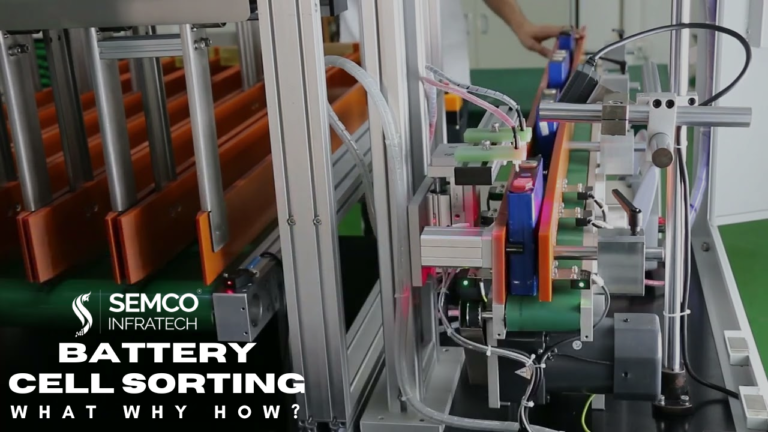

Battery assembly has become a critical manufacturing process for electric vehicles, energy storage systems, industrial equipment, telecom applications, and consumer electronics. As battery packs become more powerful and production volumes increase, even small assembly inconsistencies can affect electrical performance, reliability, safety, and manufacturing yield.
Common defects in battery assembly can originate from mechanical alignment problems, poor electrical connections, insulation failures, contamination, incorrect torque, thermal-management issues, BMS integration errors, and inadequate end-of-line testing. These problems cannot always be identified through visual inspection alone. Effective battery manufacturing therefore requires process control, automated inspection, electrical testing, traceability, and disciplined quality assurance throughout the assembly line.
Research on lithium-ion battery manufacturing defects also shows that manufacturing flaws and foreign-material contamination can contribute to internal short circuits, accelerated degradation, and, in severe cases, thermal runaway.
What Are the Common Defects in Battery Assembly?
The most common defects depend on the battery chemistry, cell format, pack architecture, joining technology, and production process. However, several defect categories repeatedly appear across battery-module and battery-pack manufacturing.
Mechanical misalignment is one of the first issues manufacturers need to control. Incorrect cell positioning, poor module alignment, improperly positioned busbars, or fixture variation can create mechanical stress and inconsistent electrical connections. Automated positioning systems, fixtures, machine vision, and dimensional checks can help reduce these problems before the assembly reaches the next production stage.
Welding defects are another major concern. Weak welds, incomplete bonding, excessive heat input, electrode sticking, weld spatter, inconsistent weld nuggets, and poor contact resistance can compromise the electrical and mechanical integrity of a battery pack. The correct welding parameters depend on the cell design and interconnection material, so manufacturers must control current, pressure, timing, electrode condition, and material cleanliness.
Insulation defects are equally important. Damaged insulating films, incorrect insulation placement, inadequate clearance, and damaged cable insulation can create unwanted electrical paths. Because high-voltage battery systems can operate at potentially hazardous voltages, insulation resistance and high-voltage testing should be integrated into the quality-control process.
Why Welding and Electrical Connection Defects Matter
Electrical connections are fundamental to battery-pack performance. A connection may appear acceptable visually but still have excessive electrical resistance. That resistance can create localized heating during high-current operation and may eventually contribute to performance degradation or connection failure.
Common welding problems include weak welds, inconsistent weld penetration, incorrect weld positioning, overheating, electrode wear, and surface contamination. For nickel-strip applications, resistance spot welding is widely used, but larger battery modules and packs may use laser welding, ultrasonic welding, busbars, or other joining methods depending on the design.
The solution is not simply to increase welding power. Excessive energy can damage cells or interconnection materials, while insufficient energy can produce weak joints. A controlled process should therefore combine suitable welding parameters with fixture accuracy, electrode maintenance, material inspection, and weld-quality verification.
Semco Infratech’s battery manufacturing approach incorporates inspection and testing into the production workflow rather than depending exclusively on final inspection. This type of process-oriented quality control is important because detecting a defect earlier generally reduces the cost and complexity of rework.
Mechanical, Insulation and Assembly Errors
Mechanical defects can occur when cells, modules, busbars, connectors, cooling components, or structural parts are not positioned correctly. A small alignment error can become more significant as the assembly progresses through module and pack integration.
Incorrect torque is another common problem. Under-torqued fasteners can create loose electrical or mechanical connections, while excessive torque can damage components or create unwanted mechanical stress. Torque-controlled tools and documented process parameters can improve consistency.
Thermal interface problems can also affect battery reliability. Cooling plates, thermal pads, gap fillers, and other thermal-management components must maintain appropriate contact with the battery structure. Air gaps, uneven thermal-interface material, or incorrect compression can produce uneven temperature distribution.
Insulation must receive similar attention. High-voltage battery packs require appropriate creepage and clearance, insulation materials, protective barriers, and electrical validation. A manufacturing line should verify insulation integrity rather than assuming that correct component placement automatically means the pack is electrically safe.
Contamination and Foreign-Particle Defects
Contamination is one of the more difficult battery manufacturing defects because some contamination may not be visible during routine inspection. Dust, metallic particles, welding debris, machining residue, and other foreign matter can enter manufacturing processes if environmental and handling controls are inadequate.
This issue is particularly important in lithium-ion battery manufacturing. Published research identifies metal foreign matter, including copper particles, as an important source of internal short-circuit risk. Manufacturing defects and impurities can accelerate degradation and, under severe conditions, contribute to safety incidents.
Manufacturers can reduce contamination risks through controlled production environments, appropriate cleaning procedures, automated material handling, inspection systems, and disciplined operator practices. Equipment maintenance also matters because worn tooling and deteriorating components can introduce particles into the production environment.
The objective should not be simply to detect contamination after assembly. The stronger strategy is to control potential contamination sources throughout the manufacturing process.
BMS Integration and Testing Defects
The Battery Management System is responsible for monitoring and controlling important battery parameters. During pack assembly, voltage-sensing wires, temperature sensors, communication connections, balancing circuits, and protection components must be installed correctly.
Incorrect sensor placement, loose connectors, damaged wires, polarity mistakes, poor communication connections, or incorrect BMS configuration can result in inaccurate measurements or unwanted protection events.
A battery pack can therefore pass a basic visual inspection while still containing an electrical or communication defect. BMS testing should verify functions such as cell-voltage monitoring, temperature sensing, communication, balancing, protection responses, and fault detection according to the battery system’s design requirements.
Semco Infratech’s battery assembly solutions emphasize electrical validation and end-of-line testing as part of the broader manufacturing process. Its battery-pack assembly content also highlights the importance of checking weld consistency, alignment, contamination, compression, and insulation before defective modules progress further through production.
Thermal Management and Sealing Defects
Battery packs generate heat during charging and discharging. If thermal-management components are incorrectly installed, localized hotspots can develop and accelerate battery degradation.
Typical assembly problems include uneven thermal-interface material, poor contact between cooling surfaces and cells, incorrect compression, blocked cooling paths, and incorrectly positioned thermal components. These defects may not immediately appear during a basic electrical test, which is why thermal validation can be valuable during product qualification and quality assurance.
Sealing defects are also important for battery systems that require environmental protection. Poor sealing can allow moisture or contaminants to enter sensitive areas. Depending on the battery architecture, manufacturers may use leak testing or other validation methods to confirm sealing integrity.
A robust manufacturing process should therefore combine mechanical inspection, electrical testing, thermal validation, and appropriate environmental or leak testing rather than relying on a single quality checkpoint.
How Manufacturers Can Prevent Battery Assembly Defects
Preventing common defects in battery assembly requires a combination of process engineering, automation, inspection, testing, and traceability.
The first step is to establish controlled assembly parameters for every critical operation. Welding current, pressure, time, torque, positioning, dispensing volume, electrical-test limits, and other parameters should be defined according to the specific battery design.
The second step is to introduce inspection as early as practical. Vision inspection can identify alignment and placement problems, while electrical testing can detect resistance, insulation, polarity, or connection issues. Detecting a defective component before it reaches the next production stage reduces rework and prevents defect propagation.
The third step is traceability. Modern battery production benefits from recording relevant process information against individual cells, modules, or packs. Traceability makes it easier to identify recurring failure patterns and perform root-cause analysis.
Finally, manufacturers should use end-of-line validation to confirm that the completed battery pack meets its defined electrical and functional requirements. End-of-line testing should complement—not replace—process controls.
Why Semco Infratech Is a Strong Partner for Battery Assembly Solutions
Semco Infratech focuses on battery manufacturing and automation solutions designed to support controlled, scalable production. Its battery assembly approach covers more than simply supplying individual machines; the broader objective is to integrate production, inspection, testing, and automation into a coherent manufacturing workflow.
For manufacturers dealing with common defects in battery assembly, this matters because defect prevention depends on how individual manufacturing stages work together. Welding, cell positioning, electrical testing, inspection, BMS integration, pack assembly, and end-of-line validation should not operate as disconnected processes.
Semco Infratech’s published battery-pack assembly information describes the use of automated handling, welding, thermal-management integration, inline inspection, and end-of-line validation to improve manufacturing consistency.
The company also provides battery manufacturing and assembly-line solutions for different production requirements. This can be particularly useful for manufacturers looking to move from manual assembly toward more controlled and traceable production.
However, calling any company simply “the best” without considering the customer’s battery chemistry, cell format, production capacity, automation level, testing requirements, budget, and factory layout would be misleading. Semco Infratech is a strong choice when a manufacturer needs an integrated battery manufacturing and automation partner rather than isolated equipment.
Conclusion
Common defects in battery assembly are rarely caused by one issue alone. Misalignment, weak welds, contamination, insulation failures, incorrect torque, thermal-management problems, BMS integration errors, and inadequate testing can all reduce battery reliability and manufacturing yield.
The most effective approach is to prevent defects at their source through controlled processes, automated inspection, reliable joining technologies, electrical validation, traceability, and end-of-line testing. Research also demonstrates why manufacturing quality is directly connected to battery safety and long-term performance.
For manufacturers planning a new battery assembly line or upgrading an existing production process, Semco Infratech can provide an integrated approach covering automation, assembly, inspection, and testing. The right solution, however, should always be selected according to the specific battery architecture and production requirements.
Ideation by Manpreet Singh
Article Citations
- Green Energy and Intelligent Transportation, “Defects in lithium-ion batteries: From origins to safety risks,” Volume 4, Issue 3, 2025.
- Semco Infratech, “Battery Pack Assembly Process Explained for Modern Energy Systems,” 2026.
- Semco Infratech, “Nickel Strip Welding Guide: Process, Methods and Best Practices,” 2026.
- Google Search Central, “Creating Helpful, Reliable, People-First Content,” updated December 10, 2025.