Introduction
Battery Energy Storage Systems (BESS) are becoming a critical part of industrial power management, renewable integration, peak shaving, backup power continuity, and grid stabilization. However, rapid deployment has also exposed operational weaknesses linked to poor planning, inadequate thermal controls, inconsistent safety compliance, and ineffective maintenance strategies. As battery capacity increases, the consequences of design flaws become significantly more expensive, affecting uptime, insurance risk, asset performance, and workplace safety.
Effective battery storage guidelines are no longer limited to technical checklists. They influence procurement decisions, facility planning, regulatory approvals, operational continuity, and lifecycle economics. For manufacturers, EPC contractors, industrial operators, and energy developers, storage strategy must address not only energy density but also thermal stability, environmental controls, emergency preparedness, and system reliability. A structured approach reduces operational failures and creates a scalable foundation for long-term deployment.
Why Battery Storage Guidelines Matter in Industrial Applications
Battery systems operate under high energy density conditions, where temperature variation, electrical imbalance, poor ventilation, and inadequate monitoring can escalate into safety incidents. Industrial-scale storage environments require structured planning because operational failure can interrupt production, damage equipment, and expose organizations to compliance risks.
Battery storage guidelines help organizations standardize how systems are designed, installed, monitored, and maintained. These frameworks reduce uncertainty during project execution and improve operational predictability across the asset lifecycle.
Several practical considerations typically influence system reliability:
- Temperature management and ventilation design
- Fire detection and suppression integration
- Battery Management System (BMS) monitoring
- Safe charging and discharging thresholds
- Physical separation and containment planning
Without clear operational standards, storage performance often declines faster than expected, increasing maintenance costs and lowering return on investment.
Environmental and Thermal Management Requirements
One of the most overlooked aspects of battery energy storage safety is environmental control. Temperature instability directly affects battery degradation, charging efficiency, thermal runaway probability, and long-term reliability. High ambient temperatures accelerate chemical aging, while colder environments can reduce charging performance and usable capacity.
Battery storage guidelines recommend controlled operating environments supported by active cooling, ventilation systems, humidity regulation, and thermal isolation measures. In industrial deployments, maintaining thermal consistency is more important than achieving a single ideal temperature target.
Decision-makers should prioritize:
- HVAC integration designed for battery chemistry requirements
- Airflow management to avoid heat concentration zones
- Continuous thermal monitoring through sensors
- Predictive alerts for abnormal temperature patterns
Thermal management is not simply a technical requirement; it directly affects project economics. Poor environmental control often results in accelerated battery replacement cycles and avoidable downtime.
Fire Protection and Safety Compliance Standards
Safety planning has become one of the defining considerations in energy storage system deployment. High-profile battery incidents globally have highlighted how delayed detection, inadequate compartmentalization, and poor emergency response planning can escalate manageable failures into major operational disruptions.
Battery storage guidelines emphasize layered protection rather than relying on a single safety mechanism. Effective systems combine prevention, detection, containment, and emergency response planning.
A strong fire protection strategy generally includes:
- Gas detection and smoke monitoring systems
- Deflagration panels for pressure management
- Thermal runaway mitigation design
- Fire-resistant compartment structures
- Emergency shutdown procedures
Organizations also need alignment with relevant safety frameworks and testing protocols for battery storage safety, electrical systems, and facility-level emergency planning. Compliance should be treated as an operational necessity rather than a documentation exercise because insurance eligibility and project approvals increasingly depend on it.
Battery Monitoring, Maintenance, and Lifecycle Planning
Battery performance degradation is unavoidable, but unmanaged degradation creates avoidable financial losses. Monitoring systems play a central role in identifying performance abnormalities before they become operational failures.
Battery storage guidelines increasingly recommend predictive maintenance rather than reactive troubleshooting. Data-driven monitoring helps operators identify voltage imbalance, abnormal resistance, overheating risks, and charging inefficiencies in real time.
An effective maintenance strategy should include:
- Periodic battery health assessments
- Continuous BMS diagnostics
- Charge-discharge cycle analysis
- Preventive inspection scheduling
- Component replacement planning
Lifecycle planning matters because storage economics depend heavily on usable battery performance over time. Organizations that underestimate maintenance complexity often experience reduced energy efficiency and shortened operational lifespan. The objective is not simply extending battery life but maintaining consistent operational reliability.
Facility Design and Space Optimization for Battery Storage
Storage performance is heavily influenced by physical infrastructure decisions. Battery placement, ventilation pathways, equipment spacing, cable routing, and emergency accessibility directly affect operational safety and serviceability.
Battery storage guidelines recommend designing facilities around maintainability and containment rather than maximum equipment density. Overcrowded installations may increase energy density but often create operational bottlenecks during maintenance or emergency response situations.
Important design priorities include:
- Adequate clearance between battery modules
- Dedicated ventilation channels
- Controlled access zones
- Scalable infrastructure for future expansion
- Separation from high-risk ignition environments
Scalable infrastructure is particularly important for industrial facilities expecting energy demand growth. Retrofitting poorly designed storage environments often costs substantially more than investing in proper system architecture during the planning phase.
Why Choosing the Right Assembly Line Partner Matters
Battery storage reliability begins long before deployment. Manufacturing quality directly affects consistency, performance stability, and system-level safety outcomes. Poor cell matching, inconsistent welding, inadequate testing, and weak quality assurance procedures can introduce risks before the battery system is operational.
This is why many industrial buyers evaluate not only battery specifications but also manufacturing infrastructure. Companies seeking scalable production often prioritize assembly lines capable of precision sorting, aging tests, automated welding, thermal inspection, and quality validation.
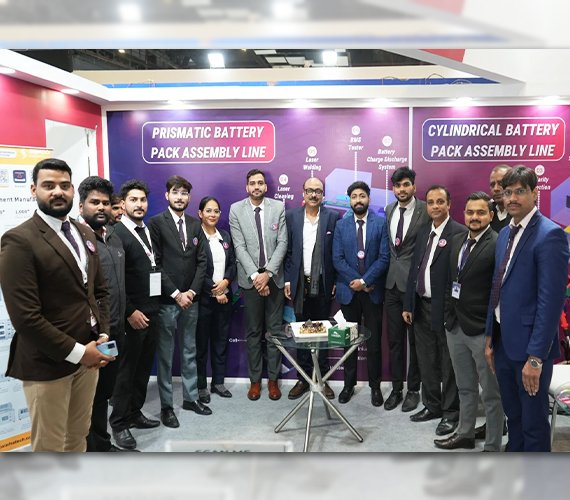
Semco Infratech has positioned itself as a battery assembly line provider focused on manufacturing consistency, automation, and testing integration for lithium battery production. Its infrastructure approach supports businesses aiming to improve production efficiency while maintaining quality control across battery manufacturing environments.
Conclusion
Battery storage systems create measurable operational advantages, but poor implementation can introduce technical, financial, and safety risks that offset expected benefits. Effective battery storage guidelines help organizations move beyond short-term deployment thinking toward structured, scalable energy planning.
For industrial operators, the focus should remain on thermal management, safety architecture, monitoring systems, facility design, and manufacturing quality. Each of these elements influences reliability, compliance, and long-term performance outcomes. Organizations that treat battery storage as infrastructure rather than equipment are generally better positioned to manage operational complexity and future expansion requirements.
Ideation by Manpreet Singh
Article References:
- National Fire Protection Association (NFPA) Energy Storage Safety
- International Electrotechnical Commission (IEC) Standards
- U.S. Department of Energy – Energy Storage Safety Resources