Introduction
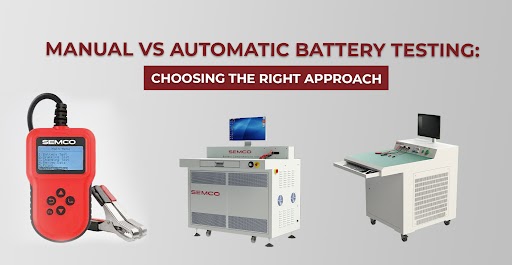
Battery testing is no longer a peripheral quality check—it is a core operational function that directly affects product reliability, safety compliance, and lifecycle performance. As battery applications expand across electric vehicles, energy storage systems, and consumer electronics, the pressure on testing infrastructure has intensified. The debate around manual vs automatic battery testing is not theoretical; it directly impacts throughput, data integrity, and operational costs.
Manufacturers often underestimate how testing methodology constrains scalability. Manual processes may appear flexible and cost-effective initially, but they introduce variability and limit data utilization. Automated systems, while capital-intensive, offer consistency and integration advantages. The real challenge lies in aligning testing strategy with production scale, product complexity, and long-term quality objectives. This article breaks down the trade-offs and provides a grounded framework for decision-making.
Understanding Manual Battery Testing in Practice
Manual battery testing relies on operator-driven procedures using standalone instruments. It is typically deployed in low-volume environments, R&D labs, or early-stage production where flexibility is prioritized over speed. Operators control parameters such as charge-discharge cycles, voltage thresholds, and environmental conditions.
The primary advantage is adaptability. Engineers can quickly modify test protocols without reprogramming systems. This is particularly useful when validating new chemistries or prototypes. However, this flexibility comes at a cost—human dependency introduces inconsistencies that are difficult to quantify.
Key operational limitations include:
- Variability in measurement accuracy due to operator handling
- Limited repeatability across shifts or facilities
- Poor integration with centralized data systems
In real-world scenarios, manual testing becomes a bottleneck as production scales. It lacks the ability to handle high-throughput requirements and fails to generate structured datasets needed for predictive analytics. For decision-makers, the issue is not capability—it is sustainability under scale.
Automatic Battery Testing Systems and Their Capabilities
Automatic battery testing systems are designed for precision, repeatability, and integration. These systems use programmable logic controllers and software-driven interfaces to execute predefined testing protocols with minimal human intervention. They are standard in high-volume manufacturing environments where consistency is non-negotiable.
The core strength of automation lies in its ability to standardize processes. Every test cycle is executed with identical parameters, eliminating operator-induced variability. This ensures reliable data across large sample sizes, which is critical for quality assurance and regulatory compliance.
From an operational standpoint, automated systems enable:
- High-throughput testing with parallel channel execution
- Real-time data acquisition and centralized monitoring
- Integration with Battery Management Systems (BMS) and MES platforms
However, automation is not a plug-and-play solution. It requires upfront investment in system design, calibration, and workforce training. Poor implementation can lead to underutilized capacity or inaccurate results at scale. The value is realized only when the system is aligned with production workflows and data strategies.
Cost, Throughput, and Accuracy Trade-offs
The comparison between manual vs automatic battery testing is often reduced to cost, but that is a shallow analysis. The real trade-offs involve throughput efficiency, data reliability, and long-term operational risk.
Manual testing has lower initial costs but higher hidden expenses. Labor dependency, slower cycle times, and error rates increase the cost per tested unit over time. In contrast, automated systems require significant capital expenditure but reduce marginal testing costs as volume increases.
From a performance perspective:
- Manual testing struggles to maintain accuracy across large datasets
- Automated systems deliver consistent results but depend on proper calibration
- Throughput in manual setups is linear, while automation enables exponential scaling
Decision-makers must evaluate total cost of ownership, not just acquisition cost. In high-demand environments such as EV battery production or grid-scale storage, manual testing becomes economically unviable. The cost of missed defects or inconsistent data far outweighs initial savings.
Data Utilization and Quality Control Implications
Battery testing is no longer just about pass/fail criteria—it is a data generation process. The shift toward predictive maintenance, lifecycle modeling, and performance optimization depends heavily on high-quality testing data.
Manual testing systems are inherently limited in this regard. Data is often recorded in fragmented formats, making it difficult to aggregate or analyze. This restricts the ability to identify trends, detect early degradation, or optimize performance parameters.
Automated systems, on the other hand, are built for data integration. They generate structured datasets that can be directly fed into analytics platforms. This enables:
- Real-time anomaly detection
- Predictive failure modeling
- Continuous process improvement
The implication is clear: testing methodology directly affects data strategy. Organizations that rely on manual processes are effectively limiting their ability to leverage advanced analytics. In contrast, automated systems create a foundation for data-driven decision-making, which is becoming a competitive necessity.
Scalability and Operational Strategy Alignment
The choice between manual vs automatic battery testing must align with long-term operational strategy. Many organizations make the mistake of selecting a testing approach based on current needs rather than future scale.
Manual systems may work in pilot phases, but they do not transition well into mass production. Scaling manual operations requires proportional increases in labor, which introduces complexity and cost. Automated systems, while complex to implement, are inherently scalable once deployed correctly.
Strategic considerations include:
- Production volume projections over 3–5 years
- Product complexity and testing requirements
- Integration with digital manufacturing ecosystems
A hybrid approach is sometimes viable, where manual testing is used for R&D and validation, while automated systems handle production-level testing. However, this requires clear process boundaries and data integration strategies. Without alignment, organizations risk creating disconnected workflows that undermine efficiency.
Conclusion
The debate around manual vs automatic battery testing is not about which method is better in isolation—it is about context. Manual testing offers flexibility but fails under scale. Automated systems provide consistency and data integration but demand disciplined implementation.
For decision-makers, the priority should be long-term operational efficiency and data reliability. If production volume is expected to grow or if quality requirements are stringent, manual testing is not a sustainable option. Automation, despite its upfront cost, becomes the only viable path.
The real mistake is delaying this transition. By the time testing becomes a bottleneck, the cost of correction is significantly higher. The right approach is to align testing strategy with growth trajectory from the outset, ensuring that systems are built not just for current needs, but for future demands.