Introduction
The global shift toward renewable energy is accelerating, but the intermittent nature of sources such as solar and wind creates operational challenges for modern power systems. Electricity generation from these sources depends on weather conditions and daylight cycles, while electricity demand follows its own patterns. Without efficient storage solutions, utilities often face renewable curtailment or must rely on conventional power plants to maintain grid reliability.
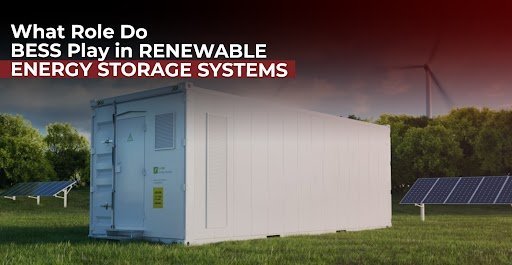
Understanding what role do BESS play in renewable energy storage is therefore critical. Battery Energy Storage Systems (BESS) provide the flexibility required to align renewable energy production with consumption. Instead of allowing excess energy to go unused, BESS stores it and delivers it when demand increases.
For utilities, energy developers, and policymakers, BESS has evolved from a supplementary technology to a strategic component of modern energy infrastructure. It improves system resilience, reduces variability risks, and supports the large-scale integration of renewable power into existing electricity networks.
Understanding BESS and Its Core Function in Energy Systems
Battery Energy Storage Systems store electrical energy chemically and release it when the grid requires additional power. Within renewable energy networks, BESS acts as a balancing mechanism between inconsistent generation and fluctuating electricity demand.
A key function of BESS is energy time-shifting. Renewable generation often occurs during periods when demand is relatively low. For example, solar power typically peaks during midday hours. BESS captures this surplus electricity and releases it later when consumption rises.
Modern battery energy storage systems consist of several coordinated components:
- Battery cells and modules
- Power conversion systems (PCS)
- Battery management systems (BMS)
- Thermal management infrastructure
- Energy management software
These integrated systems enable operators to manage storage performance and control when stored energy enters the grid. Unlike traditional backup power systems, BESS can respond to grid signals almost instantly, making it highly effective for managing renewable energy variability.
As a result, the role of BESS in renewable energy storage extends beyond simple backup power. It introduces flexibility and dispatchability to renewable generation assets.
Managing Renewable Intermittency and Grid Stability
Renewable energy variability presents significant challenges for maintaining stable grid operations. Solar and wind output can change rapidly due to shifting weather conditions, which may lead to frequency fluctuations, voltage instability, and operational strain on grid infrastructure.
BESS addresses these challenges by absorbing excess energy when generation rises and supplying stored electricity when production declines. This ability helps maintain consistent power delivery even when renewable output fluctuates.
BESS contributes to grid stability through several essential services:
- Fast frequency regulation through rapid charging and discharging
- Voltage stabilization across transmission and distribution networks
- Ramp rate control for renewable generation facilities
- Smoothing short-term fluctuations in renewable output
Because battery systems can react within milliseconds, they provide faster response times than traditional reserve generators. This rapid response capability becomes increasingly valuable as electricity systems transition away from fossil-fuel-based power plants.
For grid operators evaluating what role do BESS play in renewable energy storage, one of the most important benefits is improved reliability in renewable-heavy energy systems.
Enabling Energy Arbitrage and Peak Shaving
Battery storage also improves the economic performance of renewable energy projects. Electricity prices fluctuate throughout the day depending on market demand and supply conditions. BESS allows operators to store energy when market prices are low and sell it when prices rise.
This practice, known as energy arbitrage, helps renewable developers maximize revenue from their generation assets.
BESS also supports peak shaving, a strategy that reduces electricity demand during peak consumption periods. Instead of relying on expensive peaker plants, stored energy can be deployed to meet temporary spikes in demand.
This approach provides multiple advantages:
- Lower reliance on high-cost peak generation resources
- Reduced pressure on transmission and distribution infrastructure
- Greater operational efficiency across the power system
- More stable electricity market prices
When integrated into renewable projects, BESS enhances financial stability and operational flexibility. Renewable plants equipped with storage can participate in a wider range of energy markets rather than relying solely on generation output.
Supporting Renewable Integration at Utility Scale
As renewable deployment expands, electricity grids must accommodate increasing levels of variable generation. BESS plays a crucial role in enabling large-scale renewable integration without compromising system performance.
Utility-scale battery systems are increasingly installed alongside solar and wind power plants. These hybrid systems allow operators to manage energy production more effectively and deliver consistent power to the grid.
In practice, this integration helps address several operational issues:
- Reducing renewable energy curtailment during periods of oversupply
- Delivering scheduled electricity to meet grid commitments
- Managing transmission congestion in high-generation regions
- Supporting microgrids and isolated power networks
Hybrid renewable-plus-storage projects are particularly useful in regions where transmission infrastructure is limited. By storing excess energy locally and releasing it when grid capacity becomes available, BESS improves overall system efficiency.
For energy planners assessing renewable expansion strategies, understanding what role do BESS play in renewable energy storage is essential for developing resilient grid infrastructure.
Operational and Economic Challenges of BESS Deployment
Although BESS offers significant advantages, several challenges remain in deploying battery storage at scale. These challenges affect investment decisions, technology development, and regulatory policies.
One of the primary concerns is battery degradation. Over time, lithium-ion batteries gradually lose storage capacity, especially when subjected to frequent charge-discharge cycles required for grid services.
Other key challenges include:
- High initial capital investment
- Supply chain limitations for critical battery materials
- Safety requirements and thermal management considerations
- End-of-life recycling and battery disposal processes
Additionally, regulatory frameworks in many regions have not fully adapted to the hybrid nature of energy storage. In some markets, storage systems are still categorized strictly as generation or grid infrastructure, limiting their ability to participate in multiple energy services.
Addressing these challenges will require advancements in battery technology, improved lifecycle management strategies, and regulatory reforms that recognize the full operational value of energy storage systems.
Conclusion
Battery Energy Storage Systems are becoming a cornerstone of modern renewable energy infrastructure. Their ability to balance supply and demand, enhance grid stability, and improve the economic performance of renewable projects makes them vital for future energy systems.
When analyzing what role do BESS play in renewable energy storage, it becomes clear that their impact extends far beyond energy backup. BESS supports time-shifting, grid services, and flexible energy delivery, allowing renewable resources to operate more reliably within the power grid.
However, achieving widespread deployment will depend on overcoming cost barriers, improving battery lifespan, and adapting regulatory structures. As renewable energy capacity continues to grow, the integration of advanced energy storage solutions will be essential for building resilient and sustainable electricity systems.