Introduction (What is a Battery Assembly Line)
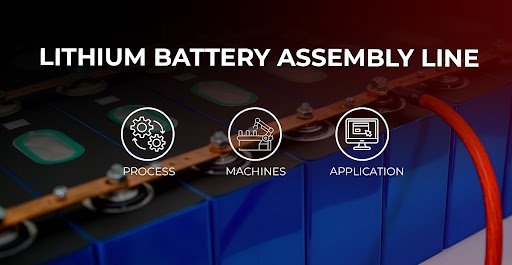
A lithium battery assembly line is a structured manufacturing system where individual cells are converted into fully functional battery packs through controlled and repeatable processes. It is not just a production setup—it is a precision-driven workflow that integrates mechanical assembly, electrical connections, and safety validation.
The primary objective is not only to increase output but to ensure consistency, safety, and long-term performance. Poorly designed assembly lines lead to issues such as cell imbalance, overheating, and premature failure at the pack level.
In real-world manufacturing, the biggest challenge is controlling variability—differences in cell quality, welding consistency, and material handling. A properly engineered assembly line minimizes these variations and enables scalable production across industries such as electric vehicles and energy storage systems.
Assembly Process
The lithium battery assembly process consists of multiple interconnected stages, each directly affecting final pack performance and reliability.
Typical process flow includes:
- Cell sorting and grading based on voltage, capacity, and internal resistance
- Cell stacking or module assembly
- Spot welding or busbar connections
- Battery Management System (BMS) integration
- Insulation, enclosure, and structural assembly
- Final testing including charge-discharge cycles and safety validation
Among these, cell matching and welding are the most critical. Poor matching leads to imbalance, while weak welds increase resistance and heat generation. Both reduce lifecycle and compromise safety.
Scaling this process without automation introduces inconsistency. Manual operations may work for small batches, but they fail under high-volume production requirements.
Machines Used
A lithium battery assembly line relies on multiple specialized machines, each responsible for a specific function within the workflow.
Key machines include:
- Cell sorting and grading machines
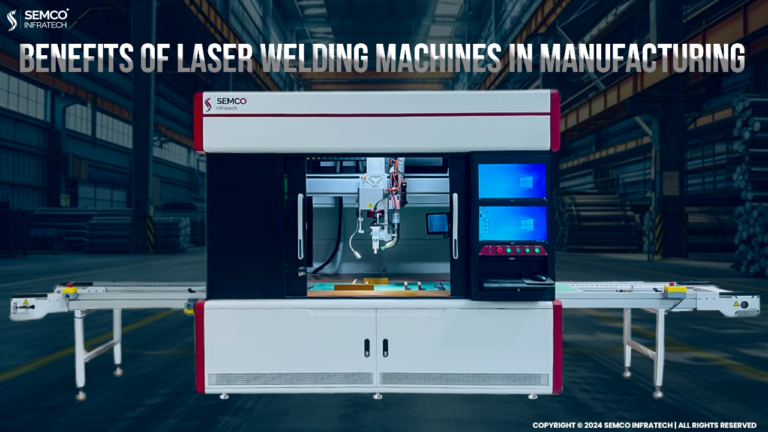
- Lithium battery spot welding machine
- Battery pack assembly fixtures
- BMS programming and testing systems
- Insulation and heat processing equipment
- End-of-line testing and validation systems
The lithium battery spot welding machine is one of the most critical components because it determines the electrical integrity of connections. Poor weld quality directly results in performance degradation and potential failure.
Advanced production setups incorporate servo-controlled welding systems, automated conveyors, and robotic handling. Using low-cost or poorly calibrated machines increases defect rates and undermines overall process stability.
Applications (EV, BESS, Electronics)
Lithium battery assembly lines are deployed across multiple industries, each with different performance and design requirements.
- Electric Vehicles (EVs): Require high energy density, strict safety standards, and precise thermal management.
- Battery Energy Storage Systems (BESS): Focus on scalability, long cycle life, and operational reliability at large capacities.
- Consumer Electronics: Emphasize compact design, cost efficiency, and high-volume production.
While the core assembly principles remain consistent, the configuration of the assembly line must be adapted for each application. Using a generic setup across all segments often leads to inefficiencies and reliability issues.
Advantages
A properly designed lithium battery assembly line provides measurable operational benefits, but only when supported by strong process control.
Key advantages include:
- Consistent product quality across production batches
- Higher efficiency with reduced dependence on manual labor
- Improved safety through controlled and repeatable processes
- Lower rejection rates and better manufacturing yield
- Scalability for increasing production demands
However, these benefits are not automatic. Without proper calibration, monitoring, and maintenance, an assembly line will simply produce defects at a higher speed. Efficiency without quality control is a liability, not an advantage.
FAQ
Q1: Which process is most critical in a lithium battery assembly line?
Cell sorting and spot welding are the most critical stages, as they directly affect performance, safety, and lifespan.
Q2: Can manual assembly be used for large-scale production?
No. Manual processes introduce variability and are not suitable for consistent high-volume manufacturing.
Q3: How is welding quality verified?
Through peel testing, resistance measurement, and visual inspection combined with process monitoring systems.
Q4: Is automation necessary?
For high-volume production, automation is essential to maintain consistency and reduce defects.
Q5: What is a common mistake in setting up an assembly line?
Choosing low-cost equipment without understanding process requirements, which leads to higher long-term operational costs and failure rates.