
As grid-scale energy storage moves from pilot projects to utility-backed deployments, manufacturers are under pressure to industrialize Battery Energy Storage System (BESS) production. At the center of this transition is a question executives cannot avoid: what is the real BESS assembly line cost, and what drives it?
Unlike cell manufacturing, BESS assembly appears deceptively simple—modules, racks, power electronics, and enclosures. In reality, cost overruns, quality failures, and safety non-compliance often emerge at this stage. Decisions around automation depth, testing architecture, and plant layout directly affect yield, throughput, and long-term operating cost.
This article breaks down BESS assembly line cost from a manufacturing perspective. It focuses on capital expenditure, operational trade-offs, and scalability constraints that matter to decision-makers planning 100 MWh to multi-GWh facilities. The goal is not to sell optimism, but to clarify where money is actually spent and why.
What Defines BESS Assembly Line Cost
BESS assembly line cost is not a single number; it is the sum of multiple tightly coupled systems. The most common mistake is treating it as a light mechanical integration process. In practice, it sits between automotive-grade battery pack assembly and power equipment manufacturing.
Key cost components typically include:
- Module and pack assembly stations (manual, semi-automated, or automated)
- Electrical integration for racks, busbars, and high-voltage harnesses
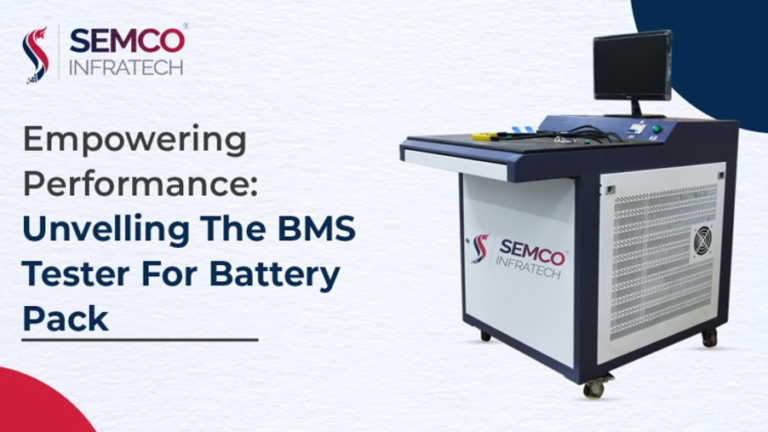
- Battery Management System (BMS) flashing, pairing, and validation
- End-of-line (EOL) testing for insulation, functionality, and safety
- Material handling systems for heavy modules and racks
What matters is not just equipment price, but process capability. Insufficient torque control, inconsistent insulation testing, or weak traceability will surface later as field failures or rejected projects. A lower upfront cost often translates into higher warranty exposure and certification delays, which are far more expensive.
Typical Capital Cost Ranges by Scale
BESS assembly line cost scales non-linearly with capacity. A 50–100 MWh facility cannot simply be replicated ten times to reach 1 GWh. Layout efficiency, automation utilization, and testing throughput change the economics.
At a high level:
- Small-scale lines (≤100 MWh/year) prioritize flexibility and low automation. Capital costs are lower, but labor cost per kWh is high.
- Mid-scale lines (300–800 MWh/year) balance semi-automation with dedicated testing infrastructure. This is where most commercial projects sit today.
- Large-scale lines (≥1 GWh/year) justify full automation, inline testing, and digital traceability, but require disciplined volume planning.
Across these ranges, BESS assembly line cost is heavily influenced by safety standards, grid compliance requirements, and redundancy in testing. Cutting corners may reduce initial capex, but it limits access to bankable utility projects and international markets.
Automation vs Manual Assembly Trade-offs
Automation is often oversold as a universal cost reducer. In BESS assembly, that assumption is flawed. The real question is not “how automated,” but where automation creates measurable risk reduction or throughput gains.
Manual assembly can work for low volumes and customized projects, but it introduces variability in:
- Electrical connections and torque consistency
- Insulation integrity at high voltages
- Assembly takt time under load growth
Automation makes sense in repeatable, high-risk steps such as:
- Busbar installation and torque verification
- High-voltage insulation and hipot testing
- Automated BMS programming and validation
The BESS assembly line cost increases with automation, but so does yield stability and certification readiness. For manufacturers targeting utility-scale deployments, selective automation is not optional—it is a prerequisite for scale.
Hidden Costs: Testing, Compliance, and Safety
Testing infrastructure is the most underestimated part of BESS assembly line cost. End-of-line testing is not a checkbox; it is the last barrier between a factory and a grid-connected asset.
Mandatory testing typically includes:
- Insulation resistance and dielectric withstand tests
- Functional validation of BMS and communication protocols
- Pre-charge and contactor sequencing checks
- Thermal and auxiliary system verification
Beyond equipment, compliance adds indirect costs. Grid codes, fire safety norms, and transport regulations require documented traceability and repeatability. Retrofitting these systems later is significantly more expensive than integrating them during line design. Manufacturers who ignore this reality often face delayed commissioning or outright project rejection.
Scalability and Long-Term Cost Control
A sustainable BESS assembly strategy prioritizes scalability over minimal upfront spend. Lines designed only for current demand struggle when order volumes double or specifications tighten.
Scalable design principles include:
- Modular line architecture with expansion capability
- Standardized workstations compatible with multiple form factors
- Digital production data for quality and warranty analysis
From a total cost perspective, BESS assembly line cost should be evaluated over a 5–10 year horizon. The cheapest line today may be the most expensive once rework, downtime, and compliance retrofits are accounted for. Decision-makers must align capacity planning with realistic demand forecasts, not best-case scenarios.
Conclusion
BESS assembly line cost is a strategic manufacturing decision, not a procurement exercise. It reflects how seriously a company treats safety, reliability, and scale. Underestimating this cost does not make it disappear; it simply shifts the burden to operations, field failures, or lost contracts.
For manufacturers targeting utility-grade energy storage, the focus should be on process capability, testing robustness, and expansion readiness. A disciplined upfront investment reduces downstream risk and enables consistent delivery at scale. In BESS manufacturing, cost control comes from engineering rigor—not shortcuts.