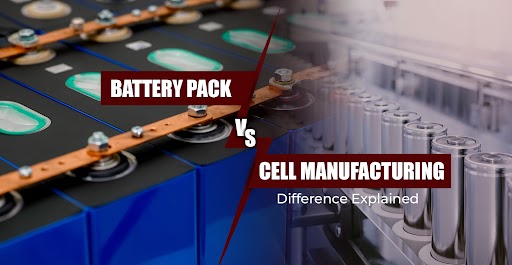
Introduction: Understanding the Battery Pack vs Cell Manufacturing Difference
In the evolving landscape of energy storage and electric mobility, misunderstanding the battery pack vs cell manufacturing difference leads to flawed strategy, wasted capital, and unrealistic technical expectations. These two processes sit at completely different layers of the battery value chain and demand entirely different capabilities, infrastructure, and expertise.
A clear understanding of the battery pack vs cell manufacturing difference is critical for manufacturers, investors, and system integrators. Cell production is rooted in electrochemistry and material science, while pack manufacturing is about system integration, safety, and real-world performance. If you treat them as interchangeable, you will make bad decisions—simple as that.
What Is Battery Cell Manufacturing in the Battery Pack vs Cell Manufacturing Difference
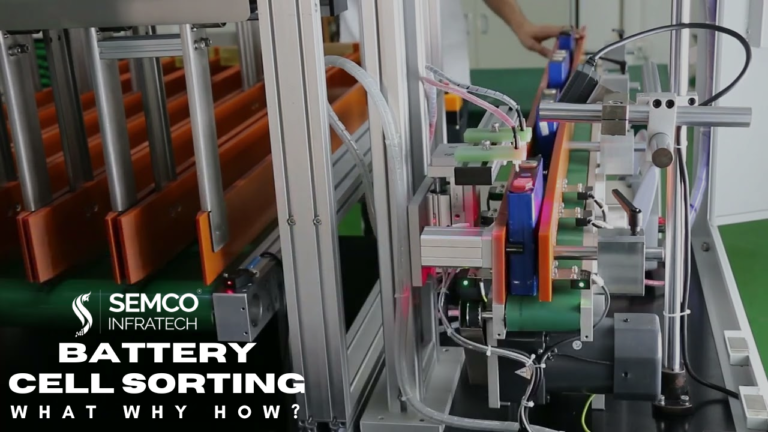
Battery cell manufacturing is the foundation of the entire industry. In the context of the battery pack vs cell manufacturing difference, this is the stage where raw materials are converted into electrochemical energy storage units.
The process includes:
- Electrode mixing and coating
- Drying and calendaring
- Cutting and stacking/winding
- Electrolyte filling
- Formation cycling
This is not assembly—it’s precision chemistry. Tiny inconsistencies here destroy performance later.
Key realities:
- Requires ultra-controlled environments (low humidity, contamination-free)
- Relies heavily on proprietary formulations
- Needs massive capital investment (gigafactories, not workshops)
- Has long ramp-up cycles due to yield optimization
This is where real technology advantage exists—but also where most companies fail due to complexity.
What Is Battery Pack Manufacturing in the Battery Pack vs Cell Manufacturing Difference
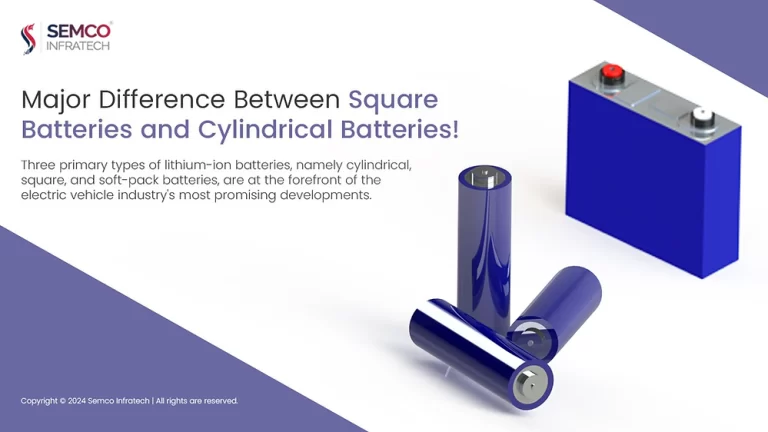
In the battery pack vs cell manufacturing difference, pack manufacturing sits downstream and focuses on turning cells into usable systems.
This is about engineering, not chemistry.
Core activities include:
- Configuring cells in series and parallel
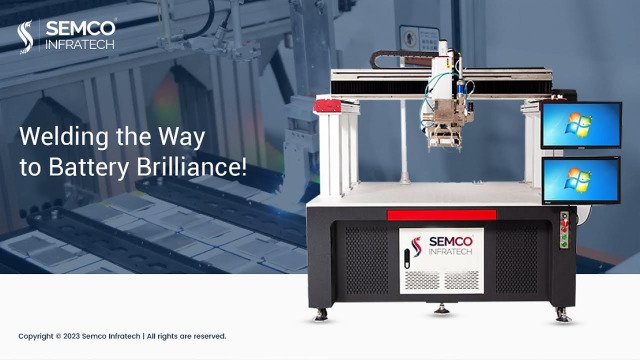
- Module and pack assembly
- Thermal management system integration
- Structural enclosure design
- Battery Management System (BMS) integration
Unlike cell production, pack manufacturing is flexible. You can work with different cell suppliers and formats.
Key realities:
- Lower investment compared to cell manufacturing
- Faster setup and scalability
- Heavy focus on safety and system reliability
- Engineering-driven rather than chemistry-driven
Don’t underestimate it though—bad pack design can ruin even the best cells.
Core Process Comparison: Battery Pack vs Cell Manufacturing Difference
The battery pack vs cell manufacturing difference becomes obvious when you compare process depth and complexity.
Cell Manufacturing:
- Chemistry-driven
- Microscopic precision
- Material-level quality control
- High failure risk from minor defects
Pack Manufacturing:
- System integration-driven
- Electrical and mechanical engineering focus
- Full-system validation
- Performance depends on design execution
Key distinctions:
- Process Type: Chemical vs System Integration
- Quality Control: Material-level vs System-level
- Scalability: Yield-dependent vs Modular
- Innovation: Materials vs Design optimization
If you think both require the same skill set—you don’t understand the industry.
Capital Investment in the Battery Pack vs Cell Manufacturing Difference
The battery pack vs cell manufacturing difference is brutally clear when you look at investment requirements.
Cell Manufacturing:
- Extremely high capital expenditure
- Requires advanced infrastructure
- Long ROI cycles
- Heavy R&D dependency
Pack Manufacturing:
- Moderate investment
- Faster deployment
- Easier entry for new players
- Scalable with demand
Here’s the blunt truth:
Most companies talking about “battery manufacturing” cannot afford cell production. They should not even try.
Supply Chain Role in the Battery Pack vs Cell Manufacturing Difference
The battery pack vs cell manufacturing difference also defines where you sit in the value chain.
- Cell manufacturers (upstream):
- Control materials and chemistry
- Influence pricing and technology trends
- High entry barriers
- Pack manufacturers (downstream):
- Customize solutions for applications
- Enable faster deployment
- Serve regional markets
This is why cell manufacturing is dominated by a few global giants, while pack manufacturing is more accessible.
Trying to compete upstream without scale is a losing game.
Performance and Safety in the Battery Pack vs Cell Manufacturing Difference
Performance and safety are shared responsibilities—but not equally.
In the battery pack vs cell manufacturing difference:
- Cells define theoretical performance limits
- Packs determine real-world performance and safety
Critical factors at pack level:
- Thermal management
- Cell balancing
- Fault detection
- Protection systems
Thermal runaway often starts at the cell—but spreads because of poor pack design.
If your pack engineering is weak, your product will fail—regardless of cell quality.
Conclusion: Strategic Importance of the Battery Pack vs Cell Manufacturing Difference
The battery pack vs cell manufacturing difference is not just technical—it’s strategic.
- Cell manufacturing = control + high risk + massive investment
- Pack manufacturing = flexibility + faster entry + lower risk
For most companies, entering through pack manufacturing is the only logical move. Jumping into cell production without scale, expertise, and capital is not ambitious—it’s reckless.
If you misunderstand this difference, you will burn money and time.
If you understand it, you can position yourself correctly in the market and actually build a viable business.