Introduction
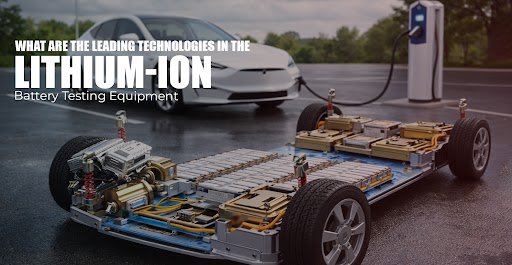
Lithium-ion batteries now sit at the core of electric vehicles, grid storage, and industrial electronics, but their failure tolerance is close to zero. A single undetected defect can escalate into safety recalls, production downtime, or regulatory shutdowns. This is why Lithium-Ion Battery Testing Equipment is no longer a support function—it is a critical control layer in modern manufacturing.
Testing complexity has increased sharply. Higher energy densities, faster charging profiles, and diverse cell formats have made legacy test methods inadequate. Decision-makers are now forced to balance accuracy, throughput, safety compliance, and scalability, often under tight cost and timeline pressure.
This article examines the leading testing technologies shaping current lithium-ion production lines. The focus is not on theory, but on what actually works at scale, why it matters operationally, and where poor testing strategies quietly destroy yield and reliability.
Advanced Charge–Discharge and Formation Systems
Charge–discharge and formation testing remains the backbone of battery validation, but modern systems have evolved far beyond basic cycling. Today’s platforms emphasize precision control, energy recovery, and parallel scalability. Poor current accuracy or thermal drift during formation directly affects cell consistency and long-term degradation, which many manufacturers still underestimate.
Modern systems focus on:
- High-precision current and voltage control across wide operating ranges
- Regenerative power architecture to reduce operational energy costs
- Multi-channel synchronization for consistent batch behavior
These systems matter because formation defines the solid electrolyte interface, which determines cycle life and safety margins. Inadequate formation control leads to latent failures that no end-of-line test can fix later. Scalable formation equipment also allows manufacturers to ramp capacity without redesigning infrastructure, a requirement for plants targeting multiple gigawatt-hours annually.
End-of-Line (EOL) Functional and Safety Testing
End-of-line testing is where theoretical quality claims collide with physical reality. EOL systems verify whether assembled cells, modules, or packs meet electrical, safety, and communication requirements before shipment. Skipping or simplifying this stage is not cost-saving—it is risk accumulation.
Modern EOL platforms integrate:
- Insulation resistance and dielectric withstand testing
- Dynamic load simulation under real operating conditions
- CAN, LIN, or Ethernet communication validation
The value lies in fault isolation. A failed EOL test should clearly identify whether the issue originates from cell imbalance, weld integrity, BMS logic, or sensor calibration. Systems that only flag pass/fail without diagnostic depth slow corrective action and inflate scrap rates. For high-volume production, EOL testing must be fast, deterministic, and tightly integrated with manufacturing execution systems.
Battery Management System (BMS) Testing Technologies
BMS testing has shifted from basic voltage checks to full behavioral validation. As software complexity increases, undetected logic errors can render otherwise healthy batteries unusable or unsafe. This is where specialized BMS testing platforms deliver real value.
Key capabilities include:
- Cell balancing response validation
- Fault injection for overvoltage, overcurrent, and thermal events
- Communication stress testing under load conditions
Why this matters: BMS faults rarely appear under nominal conditions. They emerge during edge cases—fast charging, partial failures, or thermal stress. Robust BMS testing reduces field failures and warranty exposure, especially in automotive and stationary storage deployments where remote updates are limited or regulated.
Environmental and Abuse Testing Systems
Environmental and abuse testing is often treated as a certification hurdle instead of a design feedback tool. That mindset is costly. These tests reveal how cells and packs behave under thermal, mechanical, and electrical extremes that mirror real-world misuse and failure cascades.
Modern systems support:
- Thermal cycling and accelerated aging
- Nail penetration, crush, and vibration testing
- Controlled thermal runaway propagation analysis
The technical value is predictive insight. Environmental testing identifies weak points in mechanical design, venting strategy, and thermal management long before mass deployment. Manufacturers targeting regulated markets cannot afford reactive compliance. These systems should inform design iteration, not just produce approval reports.
Data-Driven Analytics and Test Automation
The most overlooked technology in battery testing is data intelligence. Testing hardware without advanced analytics is blind infrastructure. Modern Lithium-Ion Battery Testing Equipment increasingly integrates real-time analytics, traceability, and closed-loop process control.
Critical capabilities include:
- Cell-level traceability across production stages
- Statistical drift detection and anomaly prediction
- Automated feedback to upstream process parameters
Why it matters: defects rarely appear as sudden failures. They evolve as subtle trends in impedance, capacity fade, or temperature response. Analytics-driven testing detects these signals early, protecting yield and stabilizing quality as production scales. Automation further reduces operator dependency, which remains a hidden source of inconsistency in many plants.
Conclusion
Leading battery manufacturers do not rely on a single testing technology—they deploy a coordinated testing ecosystem. Charge–discharge systems define electrochemical quality, EOL platforms enforce functional integrity, BMS testing validates intelligence, and environmental systems expose design weaknesses. Data analytics ties everything together.
The hard truth is this: inadequate testing does not fail loudly. It fails quietly through warranty costs, recalls, and lost customer trust. Investing in advanced, scalable testing infrastructure is not optional for serious lithium-ion production. It is the difference between controlled growth and unmanaged risk.