Introduction
The cost of lithium battery assembly line setup is often misjudged, even by experienced manufacturers entering the EV and energy storage sectors. Many projects run into delays or cost overruns because initial estimates focus only on equipment pricing, ignoring the complexity of integration, infrastructure, and process control. Lithium battery production is not a conventional manufacturing activity—it requires high precision, controlled environments, and synchronized automation across multiple stages.
For decision-makers, understanding cost goes beyond capital investment. It involves evaluating long-term efficiency, production stability, and adaptability to evolving battery technologies. Poor planning at this stage can lead to low yields, high operational costs, and limited scalability. This article provides a structured breakdown of the real cost drivers, hidden challenges, and strategic considerations involved in building a lithium battery assembly line.
Key Cost Components of a Lithium Battery Assembly Line
The total cost of lithium battery assembly line infrastructure is driven by several interconnected systems rather than a single purchase. Each stage of the process adds to the overall capital requirement.
Major cost elements include:
- Cell assembly equipment such as stacking and winding machines
- Module and battery pack assembly systems
- Formation and aging equipment
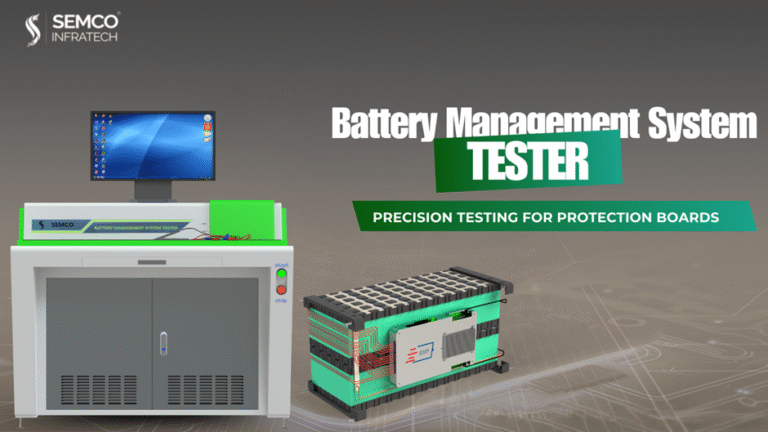
- Battery management system (BMS) integration
- Automation and material handling systems
Among these, formation and aging systems are particularly expensive due to their energy demand and extended processing time. Precision requirements in cell handling further increase equipment costs compared to traditional manufacturing setups.
As production scales, the need for advanced automation, inline inspection, and real-time data systems becomes unavoidable. Reducing these elements to cut costs may seem practical initially, but it often results in higher defect rates and lower operational efficiency over time.
Impact of Production Capacity and Automation Level
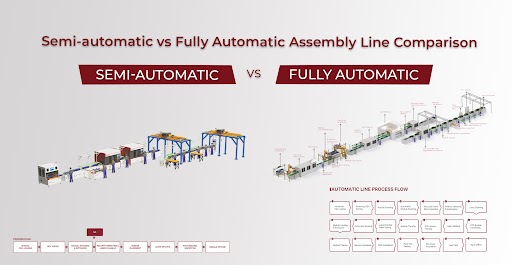
Production capacity is one of the strongest factors influencing the cost of lithium battery assembly line deployment. Smaller, semi-automatic setups may reduce initial investment but often struggle with consistency and future expansion. In contrast, fully automated high-capacity lines require higher capital but offer better efficiency and long-term returns.
The cost does not increase proportionally with capacity. Expanding output typically demands significant upgrades in infrastructure, including:
- Larger cleanroom facilities
- Enhanced power supply systems
- Advanced cooling and HVAC solutions
- Scalable control and data systems
Automation level also plays a critical role. Semi-automatic systems depend heavily on manual labor, which introduces variability and increases long-term operating costs. Fully automated systems minimize human intervention but require significant investment in robotics, sensors, and process control software.
The key is aligning automation with realistic demand projections. Overbuilding leads to underutilized assets, while underinvestment creates bottlenecks and quality risks.
Infrastructure and Facility Costs Often Overlooked
A common error in estimating the cost of lithium battery assembly line projects is underestimating facility-related expenses. Battery production requires strict environmental control to maintain quality and safety.
Critical infrastructure investments include:
- Dry rooms with low dew point control
- Cleanroom environments meeting ISO standards
- Fire protection and explosion-proof systems
- Reliable power distribution and backup solutions
- HVAC and environmental management systems
Dry rooms alone can account for a large portion of the overall investment, especially in high-capacity plants. These systems are essential to prevent moisture contamination, which can compromise battery performance and safety.
Regulatory compliance also adds to both capital and operational costs. Many companies fail to fully account for these requirements, leading to expensive modifications after installation.
Ignoring infrastructure requirements results in unrealistic budgeting. The performance of the assembly line is directly dependent on the quality of the production environment.
Equipment Sourcing and Technology Selection
Selecting the right equipment supplier has a major impact on both cost and operational performance. Not all systems offer the same level of precision, durability, or flexibility.
Manufacturers typically choose between:
- Lower-cost equipment with limited scalability
- Advanced integrated systems with higher precision and automation
While budget equipment reduces upfront investment, it often leads to higher maintenance costs, lower yield rates, and limited adaptability. High-end systems, although more expensive, provide better process consistency and integration capabilities.
Compatibility with different lithium battery chemistries—such as LFP or NMC—is another important consideration. Systems that cannot adapt to new technologies may become obsolete quickly.
Procurement decisions should focus on total cost of ownership rather than initial price. Factors like maintenance, spare parts availability, software updates, and technical support significantly influence long-term performance.
Operational Costs and Lifecycle Economics
The cost of lithium battery assembly line operations continues well beyond installation. Ongoing expenses play a critical role in determining overall profitability.
Key operational costs include:
- High energy consumption, especially during formation cycles
- Skilled labor and technical workforce
- Equipment maintenance and downtime
- Yield losses and material waste
- Software updates and system optimization
Formation processes are particularly energy-intensive, making efficiency a major cost driver. Poor system optimization can significantly increase electricity expenses over time.
Yield performance is equally important. Even small reductions in yield can result in substantial financial losses at scale. This makes investment in quality control and data analytics essential.
Lifecycle planning must also consider future upgrades. Battery technologies are evolving rapidly, and systems that lack flexibility will require costly replacements or modifications.
Scalability and Future-Proofing the Investment
Scalability is often underestimated when planning a lithium battery assembly line. Many facilities are designed based on current demand, without considering future growth or technological changes.
A scalable system should support:
- Modular production expansion
- Adaptation to new battery formats
- Software-driven process improvements
- Integration with emerging battery chemistries
Without scalability, companies risk expensive redesigns or full system replacement as demand increases. This is particularly critical in fast-growing sectors like electric vehicles and energy storage.
Future-proofing also depends on digital capabilities. Modern assembly lines rely on data for monitoring, predictive maintenance, and quality control. Systems lacking strong digital integration quickly become inefficient.
The focus should be on building flexible systems that can evolve with market and technology changes, rather than minimizing initial costs.
Conclusion
The cost of lithium battery assembly line projects involves far more than equipment investment. It includes infrastructure, automation strategy, operational efficiency, and long-term adaptability. Companies that prioritize short-term savings often face higher costs later due to inefficiencies, quality issues, and limited scalability.
A well-planned approach based on total cost of ownership, realistic capacity planning, and future readiness is essential. The objective is not simply to reduce cost, but to optimize investment for consistent performance and long-term competitiveness in a rapidly evolving industry.