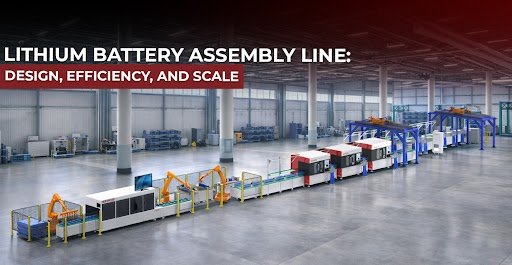
Introduction
A lithium battery assembly line is a structured production system designed to convert individual battery components into fully functional battery packs or cells. It integrates multiple precision-driven processes such as electrode preparation, cell assembly, welding, electrolyte filling, and testing into a continuous workflow. The objective is not just production, but controlled, repeatable manufacturing at scale.
In practical terms, this line ensures that every battery meets strict performance, safety, and durability standards. Unlike traditional manufacturing, lithium battery production involves chemical, mechanical, and electrical processes that must remain tightly controlled. Even minor inconsistencies can result in capacity loss, overheating, or failure in real-world applications. For decision-makers, understanding the assembly line is critical because it directly impacts product reliability, cost structure, and scalability.
Assembly Process
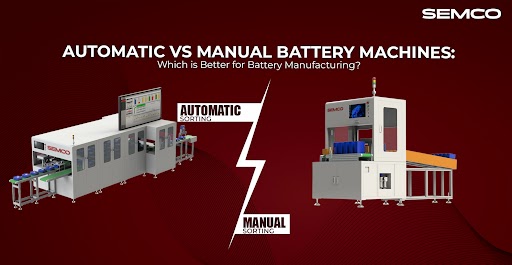
The lithium battery assembly process is a sequence of interdependent stages where precision is non-negotiable. It begins with cell sorting and matching, ensuring uniformity in voltage and capacity before assembly. This step is critical because mismatched cells degrade faster and compromise overall pack performance.
The next stages include stacking or winding, tab welding, and cell insertion into modules. Welding quality is particularly important, as poor connections increase internal resistance and heat generation. After mechanical assembly, electrolyte filling is performed under controlled environments to prevent contamination.
Formation and aging follow, where batteries undergo controlled charge-discharge cycles to stabilize internal chemistry. This stage defines long-term performance and cannot be rushed without sacrificing quality. The process ends with final testing and grading, where only cells meeting strict criteria move forward. Skipping or compressing any of these steps directly increases defect rates.
Machines Used
A lithium battery assembly line relies on specialized machines, each designed for a specific stage of production. These machines must operate with high precision and consistency, as manual intervention introduces variability.
Key machines typically include:
- Cell sorting and grading machines for parameter matching
- Automatic stacking or winding machines for electrode assembly
- Spot welding machines for tab and busbar connections
- Electrolyte filling systems with vacuum control
- Laser welding machines for sealing applications
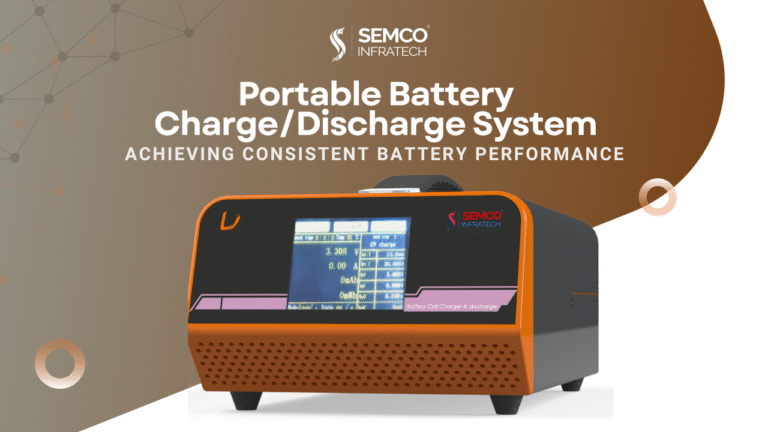
- Formation and testing equipment for performance validation
The mistake many manufacturers make is focusing only on machine specifications instead of system integration. High-end machines without proper synchronization create bottlenecks and reduce overall efficiency. The real value lies in how well these machines communicate and maintain process flow.
Applications (EV, BESS, Electronics)
Lithium battery assembly lines serve multiple industries, each with different performance and scale requirements. In electric vehicles (EVs), the focus is on high energy density, thermal stability, and long cycle life. Any inconsistency in assembly can lead to safety risks or reduced driving range.
In battery energy storage systems (BESS), the priority shifts toward reliability and scalability. These systems operate over long durations and require consistent performance across thousands of cycles. Poor assembly directly impacts grid stability and operational costs.
Consumer electronics demand compact design and cost efficiency. Here, the challenge is maintaining quality while producing at very high volumes. Each application imposes different constraints, but all rely on the same fundamental principle: a stable and well-optimized lithium battery assembly line.
Advantages
A properly designed lithium battery assembly line offers clear operational and strategic advantages. However, these benefits only materialize when the system is optimized, not just installed.
Key advantages include:
- Consistent product quality through controlled processes
- Higher production efficiency with reduced manual dependency
- Improved safety due to automated handling and monitoring
- Scalability to meet increasing market demand
- Better traceability for defect analysis and quality control
The biggest advantage is predictability. When the process is stable, manufacturers can forecast output, costs, and performance with confidence. Without this, scaling operations becomes risky and expensive.
FAQ
What is the most critical stage in a lithium battery assembly line?
There is no single stage; failure in any step can compromise the entire battery. However, welding and formation are often the most sensitive due to their direct impact on performance and safety.
Can manual assembly compete with automated lines?
Not at scale. Manual processes introduce inconsistencies that are unacceptable in high-performance applications like EVs and energy storage systems.
How do you improve production efficiency?
By identifying bottlenecks, optimizing cycle times, and ensuring proper machine integration. Adding more machines without fixing flow issues does not improve efficiency.
Is scalability easy in battery manufacturing?
No. Scaling without process stability increases defect rates. A line must be optimized at a smaller scale before expansion.
What role does quality control play?
It is central. Without continuous monitoring and data-driven control, defects go unnoticed until failure occurs in real-world applications, which is far more costly to fix.